Bona Products FAQ
30 questions answered by NSW's only Bona Premier Dealer.
Bona Products (30)
What is Bona DriFast Stain?
Bona DriFast Stain is a water-based timber stain that dries fast enough to get a finish coat on the same day. A professional floor sander uses it when you want to change the colour of your timber floors without the long wait times you'd get with traditional stains. Colour options at sand-aid.com.
How does Bona DriFast Stain compare to solvent-based stains?
Bona DriFast Stain is water-based with low odour and fast dry times, while solvent-based stains have stronger fumes and take longer to dry. A professional floor sander prefers Bona DriFast for its safety, speed, and consistent results. Learn more at sand-aid.com.
What colours are available in Bona DriFast Stain?
Bona DriFast Stain comes in a wide range of colours from light naturals to deep browns and greys, and you can intermix them for custom shades. A professional floor sander carries the full range and can create custom blends for your project. See the colours at sand-aid.com.
What is the Bona DCS 70 dust containment system?
The Bona DCS 70 is an industrial dust containment system that captures 99.99% of sanding dust at the source, keeping your home clean during the sanding process. A professional floor sander runs it on every job to protect your furniture, air quality, and lungs. Book dustless sanding at sand-aid.com.
Is dustless floor sanding really dustless?
The Bona DCS 70 captures 99.99% of sanding dust, so yes, it's virtually dustless -- a tiny amount of fine dust might still show up but it's nothing like traditional sanding. A professional floor sander uses this system as standard on all jobs. Enquire at sand-aid.com.
Why does dust containment matter during floor sanding?
Dust containment protects your health, keeps your home clean, stops dust from contaminating the finish coat, and gives you a smoother final result. A professional floor sander uses the Bona DCS 70 on every project because the quality difference is significant. Details at sand-aid.com.
What is the Bona Belt UX 200?
The Bona Belt UX 200 is a professional belt sander used for the main field sanding of timber floors. A professional floor sander uses it to efficiently strip old coatings and level the floor surface before finishing goes on. Professional equipment details at sand-aid.com.
Why do professionals use the Bona Belt UX 200?
The Bona Belt UX 200 delivers consistent, flat sanding results with excellent dust extraction compatibility and reduced vibration for the operator. A professional floor sander invests in Bona equipment because it produces better results than generic machines. Learn about the process at sand-aid.com.
What is the Bona Edge UX?
The Bona Edge UX is a professional edging sander that gets into the areas along walls and corners where the belt sander can't reach. A professional floor sander uses it to make sure you get a seamless finish right to the edge of every room. Details at sand-aid.com.
Why is edge sanding important in floor sanding?
Without proper edge sanding, you end up with visible lines where the belt sander stopped and an uneven finish along the walls. A professional floor sander uses the Bona Edge UX to blend the edges perfectly with the main floor so you never see a transition line. Quality details at sand-aid.com.
What is the Bona FlexiSand 1.9?
The Bona FlexiSand 1.9 is a multi-disc rotary sander used for fine sanding, screening between coats, and prepping floors for recoating. A professional floor sander uses it to get the smoothest possible surface before the finish goes on. Equipment details at sand-aid.com.
How does the Bona sanding process work?
professional floor sanders run the Bona Belt UX 200 for main field sanding, the Bona Edge UX along walls, and the Bona FlexiSand 1.9 for final smoothing -- all connected to the Bona DCS 70 dust containment system. That gives you a perfectly smooth, dust-free surface ready for coating. Process at sand-aid.com.
Are Bona products environmentally friendly?
They're among the most environmentally responsible products in the industry -- low VOC emissions, GreenGuard Gold certified, and sustainably manufactured. It's one of the reasons professional floor sanders choose Bona. Environmental details at sand-aid.com.
What does GreenGuard Gold certification mean for Bona?
It means Bona products meet the strictest indoor air quality standards going, including limits set for sensitive individuals like children and the elderly. That's a big deal for health-conscious homeowners, and it's why professional floor sanders value the certification. Details at sand-aid.com.
What is the VOC content of Bona products?
Bona water-based products have some of the lowest VOC levels in the industry, typically under 100g/L. That makes them safe for indoor use and compliant with strict environmental standards. It's one of the reasons professional floor sanders stick with Bona. VOC details at sand-aid.com.
Are Bona coatings safe for people with asthma?
Bona water-based coatings are low-VOC and GreenGuard Gold certified, which makes them among the safest options for asthma sufferers. On top of that, the Bona DCS 70 dust system eliminates sanding dust from the air. professional floor sanders use these products in hospitals and schools -- that tells you something. Health details at sand-aid.com.
Does Bona make products for cork floors?
Yep, Bona products can go on cork flooring with the right preparation. professional floor sanders use lighter sanding techniques on cork to preserve the surface, then apply Bona finishes for protection. Cork floor enquiries at sand-aid.com.
What is the warranty on Bona floor coatings?
Bona offers product warranties when their products are applied by trained professionals following their guidelines. professional floor sanders apply Bona products to specification, which means the warranty conditions are met from the start. Warranty details at sand-aid.com.
How do Bona products handle Australian climate conditions?
Bona products are tested and approved for Australian conditions including heat, humidity, and UV exposure. Their water-based finishes don't yellow in intense Australian sunlight. Floor sanders use them year-round and manage conditions on site. More at sand-aid.com.
What notched trowel should I use?
Match the trowel notch to the board width and thickness per the Bona TDS. For standard 130-180mm engineered boards the B3 notch is the usual pick. Ring Sand-Aid with the board spec and we'll tell you the exact trowel notch and the coverage rate in square metres per kilo.
What pack size does Sand-Aid sell Handley Urethane in?
The 20L trade pack in all four sheens. That's the size that makes sense for a working floor sander on full-house and commercial jobs. Smaller retail packs can be ordered in on request.
Which Handley Urethane sheen should I use?
Gloss for traditional high-shine showroom and commercial looks. Satin is the all-purpose residential pick. Low Sheen is flatter with P4 slip rating potential when combined with Handley Anti-Slip Additive -- good for stairs and commercial entries. Matt is closest to an untreated look and hides scratches on busy residential floors. All four are inter-mixable so you can dial in a custom sheen by blending two pots.
Can I mix Handley Urethane sheens together?
Yes. All four sheens in the Handley Urethane range are designed to be inter-mixable. If a client wants a sheen between Satin and Matt, blend a 50/50 from two 20L pots. Keep records of the mix ratio if you need to colour-match the same sheen on a future recoat.
How long does Handley Urethane Rapid Seal take to dry?
Handley publishes approximately 30 minutes walk-on time for Rapid Seal, with the caveat that it's temperature dependent. Expect it to be faster in 25-degree weather and slower below 15. Always follow the Handley TDS on the tin for the recoat window.
Is Handley Urethane a single-component or two-component system?
Single-component (1K). No mixing, no pot-life clock, no hardener to add. Open the 20L pot, pour what you need, cap the rest.
What substrates does Handley Urethane cover?
Timber, parquet and cork. The Handley Urethane sheens are formulated to work across all three. Cork in particular benefits from the flexibility of a solvent polyurethane because it moves more than timber.
Can Handley Urethane be used on stairs?
Yes -- the Low Sheen and Matt grades in particular work well on stairs. For proper slip resistance on treads, add Handley Anti-Slip Additive to the final coat. The Low Sheen grade has been tested to a P4 slip rating on the AS 4586 scale with the additive included.
Does Handley Urethane smell when applied?
Yes -- it's a solvent-based coating so there's a noticeable solvent odour during application and through the initial cure. Keep the site ventilated, tell the client not to occupy the space while it's drying, and wear appropriate PPE. Water-based systems have far less odour if that's a site constraint.
What's the shelf life of a 20L Handley Urethane pot?
Check the date printed on the tin. Solvent polyurethane keeps for longer than water-based in an unopened pot stored cool and dry, but once opened the solvent starts to evaporate and the coating thickens over time. Plan to use an opened 20L within a reasonable working period. Store upright, well sealed.
What is the Bona OptiSpread UX applicator?
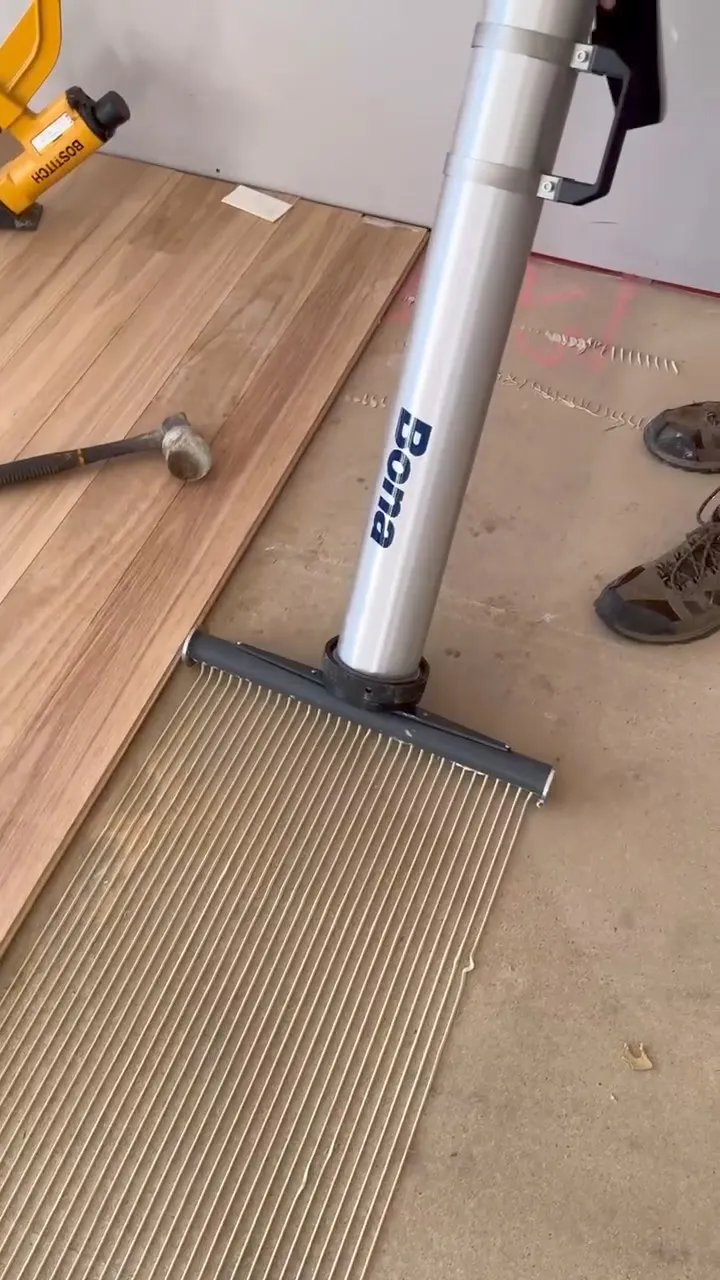 A hand-held applicator gun designed for Bona Quantum T adhesive in 9kg sausages. It gives consistent bead size and controlled application without the fatigue of manual caulking guns. The trigger mechanism is geared for less effort per squeeze. Professional floor installers use it for glue-down engineered and solid timber installations. Available from Sand-Aid.
Still have a question?
Ring Brad. 24 years of Bona experience. Straight answer, no runaround.
Call 1300 950 551