Species FAQ
25 questions answered by NSW's only Bona Premier Dealer.
Species (25)
What lighter-toned Australian timber species are available for flooring?
Common lighter-toned species from NSW and Queensland include Blackbutt, Silvertop Stringybark, White Mahogany, Tallowwood, and Cypress. They range from pale yellow to light honey tones. A professional floor sander works with all these species and can help you pick the right colour for your space.
What brown and red toned Australian timbers are used for flooring?
Brown and red toned species include Brushbox, Turpentine, Grey Box, Spotted Gum, and Grey Ironbark. You're looking at rich warm tones from medium brown through to deep red. Any experienced floor sander knows these hardwoods and their unique characteristics.
What Victorian and Tasmanian timber species are used for flooring?
Popular species from Victoria and Tasmania include Tasmanian Oak, Victorian Ash, Wormy Chestnut, and River Red Gum. They range from light straw colours through to deep reddish-brown. professional floor sanders have plenty of experience with southern Australian timber species.
Why does sapwood look different from heartwood in my timber floor?
Sapwood comes from the outer living portion of the tree, so it naturally looks different from heartwood -- different chemical properties, different pigmentation. On top of that, tree age affects the colour. Younger trees typically produce lighter timber. It's normal variation, not a defect. A professional floor sander can tell you what to expect with colour variation in your species.
What is strand woven bamboo flooring?
Strand woven bamboo's made from bamboo strands glued together -- it's technically a grass, not wood -- with fibres mainly running down the board length. Like all wood-based products, it's hygroscopic, so the moisture content and dimensions change depending on how humid the air is around it. A good floor sander can sand and coat bamboo floors no problem, you just need the right techniques.
How hard should my timber floor be for household use?
For most households, a Moderately Hard species typically gives you enough durability against foot traffic, furniture, and general wear. Australian hardwoods come in Very Hard, Hard, and Moderately Hard categories. The right hardness level depends on your household's traffic and lifestyle -- a floor sander can point you in the right direction.
How do I handle colour variation in a single-species timber floor?
Single species floors show wide natural colour variation because sapwood differs from heartwood, tree age affects the hue, and growing regions produce different colours. When you're installing, distribute colour and features relatively evenly to create a balanced look. Good board selection and thoughtful layout make a big difference to the visual balance across your floor.
What density of cork tile should I choose for flooring?
Cork tiles come in medium density (400-450 kg/m3) and high density (approximately 500 kg/m3), with standard dimensions of 305x305mm or 300x300mm at 6mm thickness. Higher density cork gives you better wear resistance for high-traffic areas. Pick the density based on how much traffic the area's going to get.
What natural properties make cork suitable for flooring?
Cork has enclosed air cells that give it natural cushioning and insulation, plus suberin -- a natural moisture-repelling substance that protects against water damage. That's what makes it comfortable underfoot and naturally resilient. It's a genuinely good flooring material that can be sanded and maintained to keep it looking its best.
What primer should I use on blackbutt floors?
Bona Prime Intense. Blackbutt has high tannin content that bleeds through water-based topcoats as a grey-green haze if not blocked by a tannin-control primer. Classic UX isn't recommended on blackbutt. One coat of Prime Intense at 8 square metres per litre, 1-2 hours drying, then two coats of topcoat (Traffic HD for commercial, Traffic GO for fast residential, Mega for standard residential). Sand-Aid stocks Prime Intense in 5L. Ring 1300 950 551 with the square metres.
What primer should I use on spotted gum?
Bona Prime Intense. Spotted gum carries tannin and natural oils that can bleed through water-based finishes. Prime Intense controls the tannin and deepens the grain colour. If the client wants a natural oil finish instead of poly, Bona Hard Wax Oil works with spotted gum's natural oils rather than fighting them. Sand-Aid stocks both. Ring 1300 950 551 with the floor area and the look the client wants.
What primer should I use on Tasmanian oak?
Bona Classic UX. Tasmanian oak is low-tannin and responds well to the everyday primer. Classic UX keeps the natural pale tone, fills the grain evenly, and sets up a clean base for any Bona topcoat. No need for Prime Intense on Tas oak unless the client specifically wants a deeper colour pop. Sand-Aid stocks Classic UX in 5L.
What primer should I use on ironbark?
Bona Prime Intense. Ironbark carries heavy tannin content, especially on freshly milled or recently sanded boards. Prime Intense controls the bleed and brings out the depth of the dark timber. Classic UX isn't recommended on ironbark. Expect to use more belts on the sanding -- ironbark is one of the hardest domestic species and eats standard abrasives. Sand-Aid stocks SIA 2800 Zirconia belts which handle ironbark better than generic aluminium oxide.
What is the best floor finish for spotted gum?
Depends on the look. For a poly finish: Prime Intense (tannin control + grain pop) then Traffic HD or Traffic GO on top. For a natural oil finish: Bona Hard Wax Oil, which works with spotted gum's natural oils rather than fighting them. Sand finer than usual -- spotted gum's interlocked grain shows scratches easily. Use the grit picker at sand-aid.com/grit-picker for the SIA belt sequence. Sand-Aid stocks all of these.
What topcoat is best for cypress pine floors?
Bona Mega or Wave 2K in Matt or Satin. Cypress is soft and knotty -- it dents easily so a single-component finish (Mega) or value 2K (Wave 2K) is usually enough because the timber will dent before the coating wears through regardless of which finish is on top. Sand finer than usual (start P50, the grit picker at sand-aid.com/grit-picker gives the full sequence). Classic UX is the right primer -- no tannin issues on cypress.
What is the best primer for jarrah floors?
Bona Prime Intense. Jarrah carries moderate tannin plus natural oils that can interfere with water-based topcoat adhesion. Prime Intense controls the tannin, deepens the rich red-brown colour, and sets up a clean base for the topcoat. Sand finer than usual on jarrah -- the deep colour shows every scratch. Sand-Aid stocks Prime Intense in 5L.
Why do old cypress pine floors look orange?
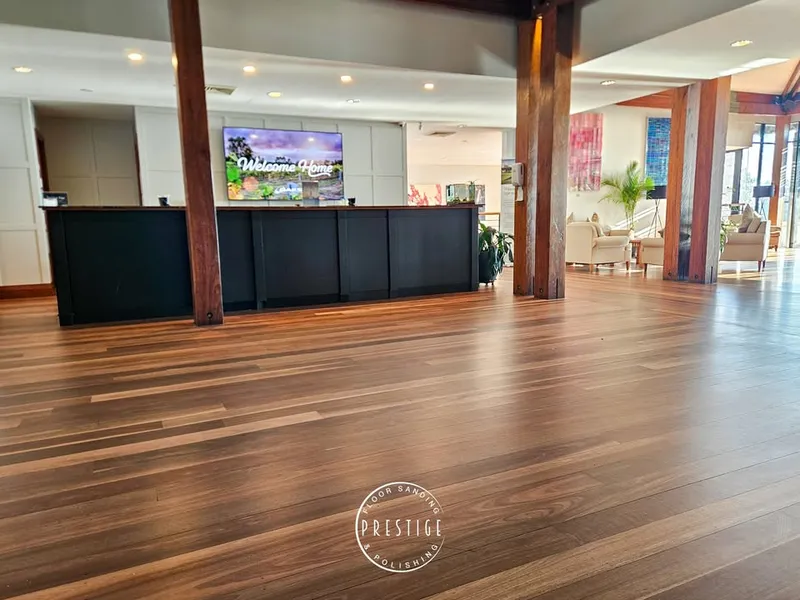 The original solvent polyurethane yellows and ambers over time. After 15-20 years it looks deep orange. When you sand it back to raw timber, the natural colour is pale honey with dark knots. The difference is dramatic -- most homeowners don't realise what's hiding under the old coating. Finish with a water-based system like Bona Traffic HD or Mega to keep the natural tone.
What does a 15-year-old blackbutt floor look like after sanding?
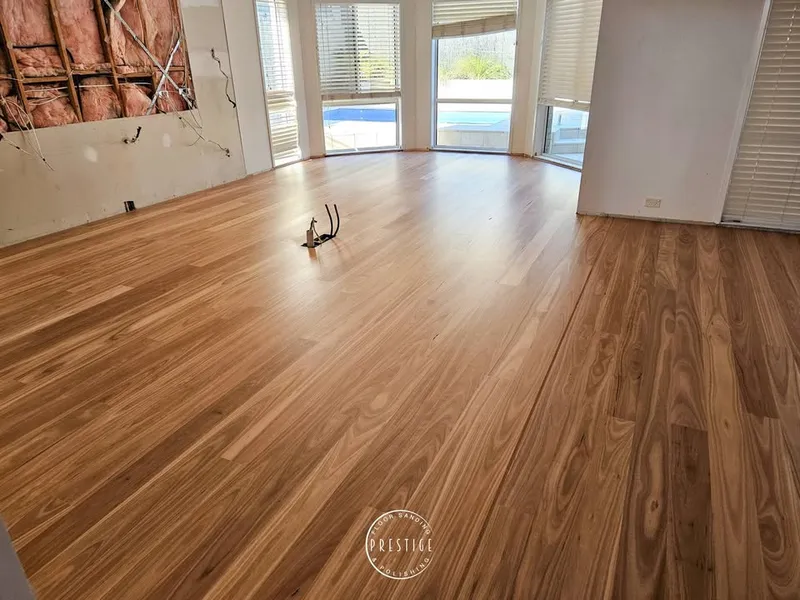 Better than new. Blackbutt darkens and develops character with age. When you sand off the worn coating, the grain shows through with richer colour variation than fresh timber. Recoat with Prime Intense (to block tannin) then Traffic HD, and the floor looks like it was laid yesterday but with the depth of aged timber.
Can you lay new blackbutt next to existing blackbutt in an extension?
Yes, but expect a colour difference initially. New blackbutt is lighter than aged blackbutt. Sanding both areas back and coating together helps blend them. Prime Intense evens out the tannin response across old and new boards. Over 6-12 months the new timber darkens to match. A good sander feathers the transition so the join disappears.How do you restore a worn jarrah floor?
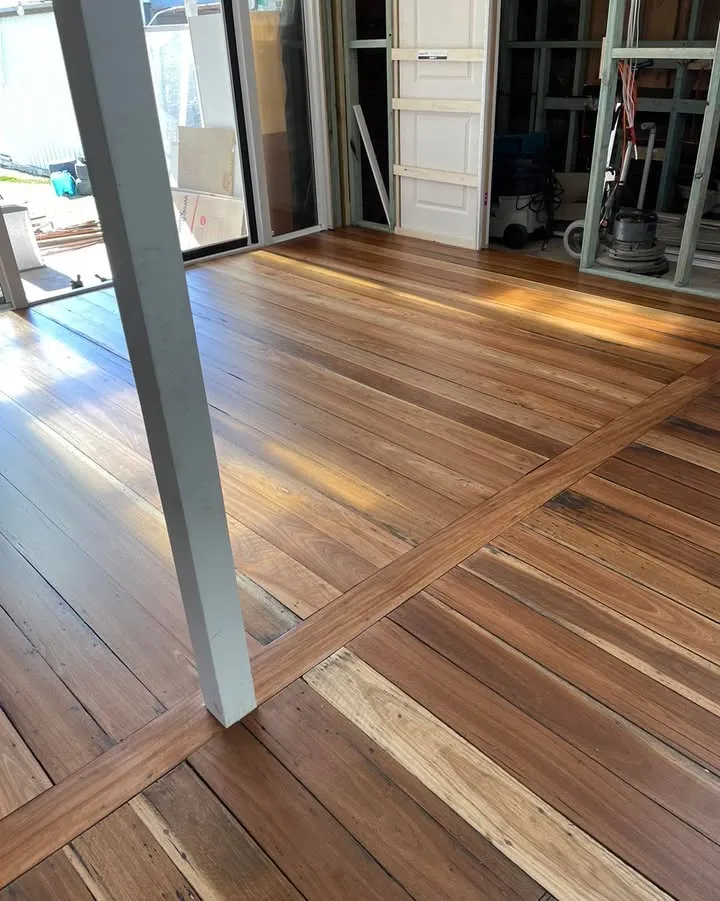 Jarrah is extremely hard (Janka 8.5) so it sands slowly but the result is worth it. Start at P36 or P40 -- jarrah eats belts, budget for extras. The natural deep red colour comes through once the old coating is removed. Use Prime Intense as the primer (jarrah has tannin) then Traffic HD for maximum durability. The colour change from worn to freshly coated is the most dramatic of any Australian hardwood.
What finish brings out the best in brushbox?
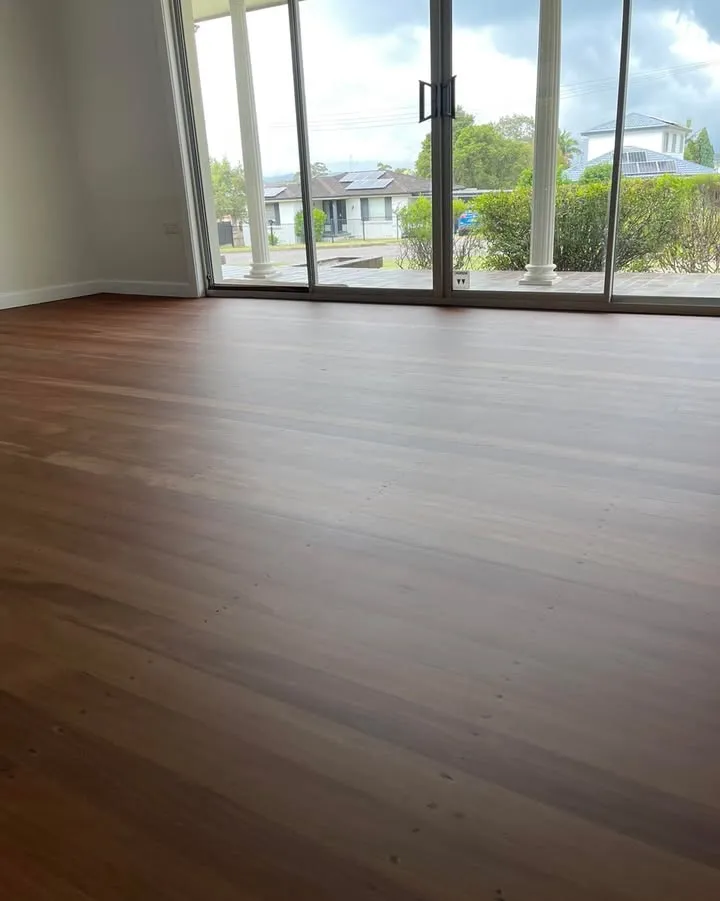 Brushbox has an even, tight grain with warm brown tones. It sands cleanly without drama -- no tannin issues, no interlocked grain. Classic UX primer then Traffic HD in Extra Matt or Silk Matt lets the natural colour and grain show through without yellowing. Brushbox is one of the easiest Australian hardwoods to get a flawless finish on.
Why is tallowwood difficult to coat with water-based finishes?
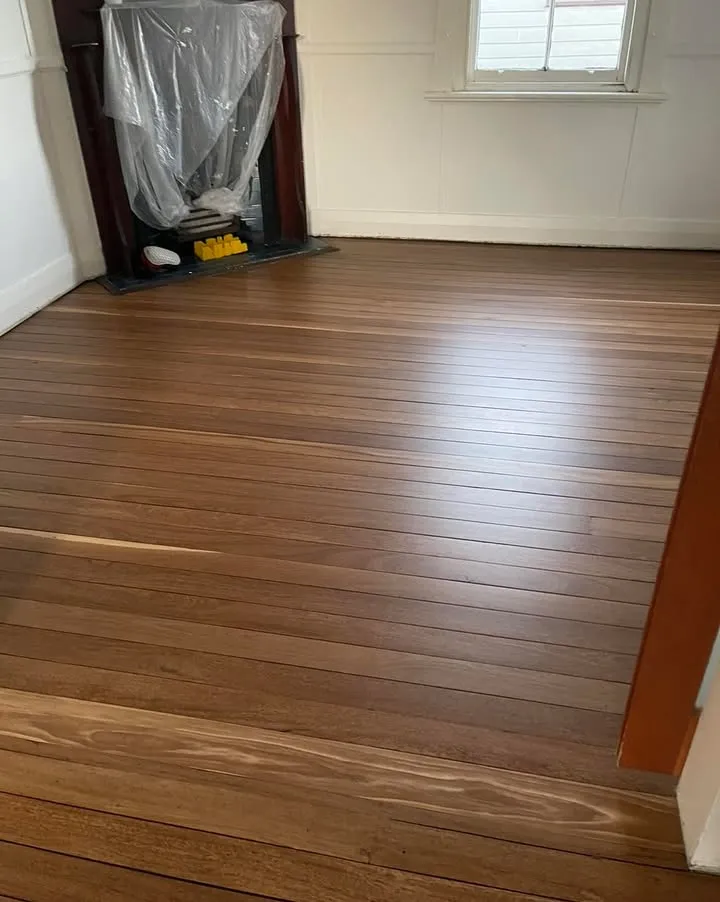 Tallowwood has very high tannin content and natural oils. Without the right primer, water-based topcoats react with the tannin and cause green or grey discolouration (tannin bleed). Always use Prime Intense on tallowwood -- it blocks the tannin before the topcoat goes on. Never use Classic UX on tallowwood. Allow proper drying time between coats as tallowwood is naturally oily and slower to cure.
What is Baltic pine and how do you finish it?
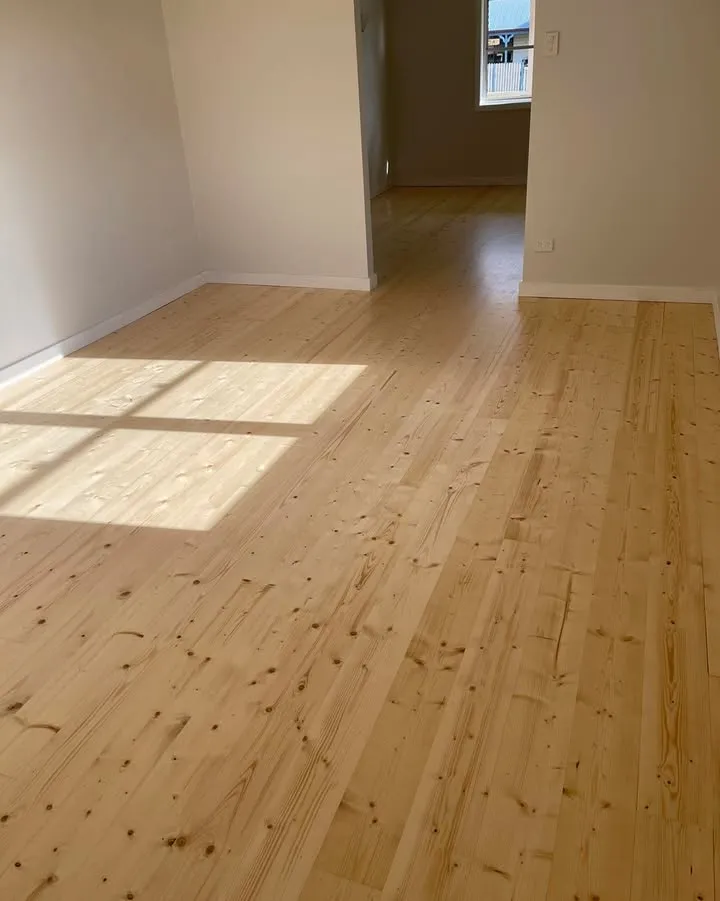 Baltic pine is a softwood imported from Northern Europe, common in older Australian homes (pre-1950s). It's softer than hardwoods so it dents easily but sands quickly. The grain is straight with distinctive knots. Sand carefully -- Baltic pine shows every scratch. Classic UX primer, then Traffic HD or Mega for durability. Hard Wax Oil is also popular for Baltic pine when you want a natural, matte look that hides minor wear.
What does a cypress pine floor look like halfway through coating?
 Dramatic. The raw sanded side is pale blonde with dark knots. The coated side is warm honey with depth and grain definition. The contrast shows exactly what the coating does -- it doesn't just protect, it brings out the natural character of the timber. Water-based finishes like Bona Traffic HD keep the natural colour without the yellow/orange tint that old solvent poly creates.
What does blackbutt look like finished with Bona Traffic HD?
 Clean, natural, with a low sheen that shows the grain without looking plastic. Traffic HD in Extra Matt or Silk Matt is the most popular choice for blackbutt -- it lets the natural brown and cream tones come through without yellowing. The 2K hardener gives it commercial-grade durability even in high-traffic residential areas. Re-sand and recoat every 8-12 years depending on wear.
Still have a question?
Ring Brad. 24 years of Bona experience. Straight answer, no runaround.
Call 1300 950 551